China Top Vinyl Windows Manufacturers How to Choose?

Choosing among China’s top vinyl windows manufacturers requires more than comparing catalog prices. A polished website can hide inconsistent profiles, weak hardware, or uncertain quality control. The real test begins with evidence: factory experience, production capacity, export references, and independently verified certifications.

Joe Lstiburek, a respected building-science expert, offers a useful warning: “A window is only as good as the wall around it.” His point applies directly to vinyl windows. Ask manufacturers about frame composition, welding strength, Low-E glass, spacer systems, air leakage, water resistance, and wind-load testing. Request test reports, not promises. Inspect sample corners closely. Clean welds should look even, without rough flashes or visible gaps. Open and close the sash repeatedly. It should move smoothly, without scraping.

A reliable supplier should explain its installation method, packaging design, replacement policy, and warranty limits in clear English. Check whether the factory controls extrusion, glazing, and final assembly internally. Third-party audits and project references add confidence, especially for large commercial orders. Still, no supplier is perfect. Some factories may offer excellent frames but weaker after-sales support. Others may communicate well but lack consistent testing discipline.

Your climate matters too. Coastal projects need stronger corrosion protection. Cold regions may require better thermal performance and triple glazing. Compare complete window systems, not isolated prices. The cheapest quote may become expensive after damaged shipments, delays, or poor installation. Choose the manufacturer that can prove performance, communicate honestly, and improve when something goes wrong. That is where trust begins.
China Top Vinyl Windows Manufacturers How to Choose?

What Defines a Top Vinyl Window Manufacturer in China?

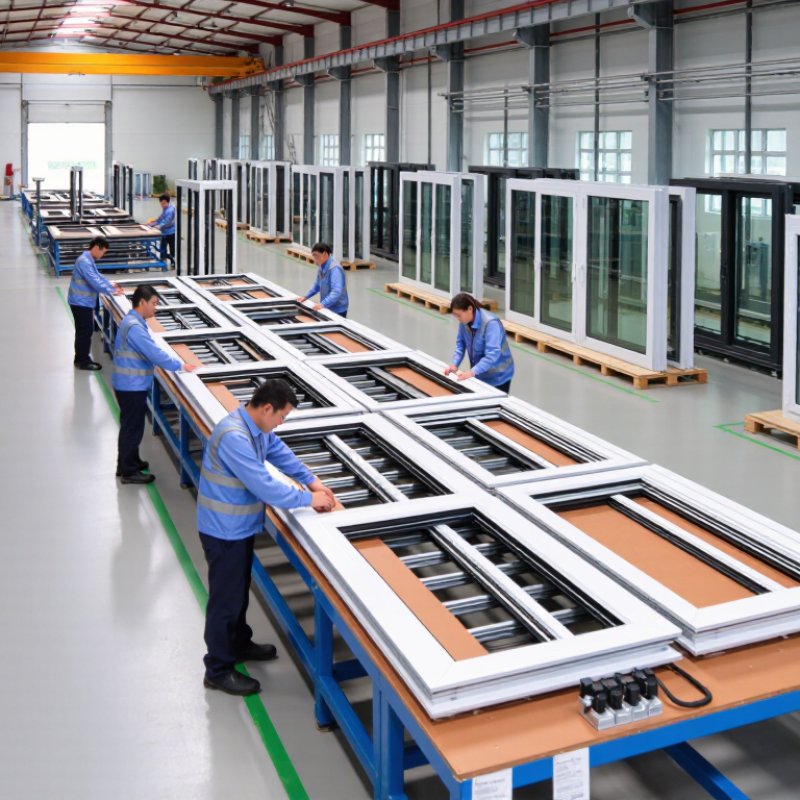
A top vinyl window manufacturer in China offers more than attractive samples and competitive prices. Look for proven experience with similar climates, building types, and project volumes. Skilled teams understand profile formulation, steel reinforcement, corner welding, drainage, and glazing compatibility. Their factory should show clear production steps, not only a polished showroom. Ask for test records covering air leakage, water resistance, wind pressure, thermal performance, and hardware durability. Independent laboratory evidence adds credibility.

Quality control must be visible in daily work. Inspect extrusion surfaces, welded corners, gaskets, glass edges, and frame dimensions. A reliable manufacturer uses documented inspections from material receiving to final packing. It should also explain tolerance limits in practical language. Good technical support matters. Engineers should review drawings, installation conditions, local weather, and opening sizes before production. Factory experience is useful, but it does not replace careful project communication.

No factory gets every detail right. Even experienced teams may miss a small drainage issue during a rushed revision. That is why sample approval, pre-production checks, and corrective records matter. Visit the facility when possible, or request live video inspections and traceable test samples. Confirm lead times, replacement procedures, warranty terms, and after-sales responsibilities in writing. A dependable manufacturer admits limitations, responds with evidence, and improves when a problem appears. Fancy claims fade quickly. Consistent records do not.

China Top Vinyl Windows Manufacturers: How to Choose?

What Defines a Top Vinyl Window Manufacturer in China?

Thermal performance is a practical starting point when evaluating vinyl window manufacturers. Typical center-of-glazing U-values decrease as glazing systems improve: single clear glass is approximately 5.7 W/m²K, double clear glass about 2.8 W/m²K, double low-E argon glass about 1.6 W/m²K, and triple low-E argon glass about 0.8 W/m²K. A strong manufacturer should provide independently verified U-value, air-leakage, water-resistance, and wind-load test reports for the complete window system rather than only the glass.

Which Vinyl Window Materials and Technologies Should You Evaluate?

When evaluating China’s top vinyl window manufacturers, begin with the frame material rather than the sales brochure. Vinyl usually means uPVC, but formulations differ. Ask about resin quality, impact modifiers, UV resistance, and calcium-zinc stabilizers. A well-designed profile should resist warping during hot summers and brittle failure in cold weather. Check the profile’s wall thickness and internal chambers, not only its appearance.

Glass technology deserves equal attention. Double glazing may reduce heat transfer, while triple glazing can improve comfort in severe climates. Low-E coatings control solar gain, but the correct coating depends on window orientation and local weather. Warm-edge spacers can reduce condensation around the glass edge. Ask for U-value, solar heat gain, and air-leakage test results from recognized laboratories. Ask for test evidence.

Hardware and fabrication often reveal practical experience. Multi-point locks should engage smoothly without forcing the sash. Fusion-welded corners need clean, consistent seams. Reinforcement inside the frame should match the window size and wind exposure; thin steel may be inadequate for large units.

Drainage paths must remain open after installation. Small details matter.

Do not judge quality from one sample corner. Request production records, material specifications, and evidence of batch inspection. A factory may offer impressive technology but inconsistent assembly control. That risk deserves attention. I would also test a finished window under repeated opening, hose spray, and temperature changes. No specification is perfect. Installation quality can still undermine excellent materials, so review the fixing method, sealant compatibility, and installer training before placing an order.

How to Compare Product Quality, Certifications, and Customization Options?

When comparing China’s top vinyl window manufacturers, product quality should be measured, not guessed from showroom samples. Check the vinyl profile for consistent color, smooth corners, and firm welds. Open and close a sample repeatedly. The sash should move without scraping or excessive force. Ask for thermal performance data, including U-factor, solar heat gain coefficient, air leakage, water resistance, and wind pressure results.

Certifications need careful verification. Request complete test reports, certificate numbers, issuing laboratories, test dates, and the exact product series covered. A certificate for one window design may not apply to another. Check whether the laboratory is properly accredited for your target market. Factory audits can also reveal storage conditions, production controls, and inspection records. In practice, these details often matter more than attractive brochures. Still, paperwork can be incomplete. Review it critically.

Customization should match the building, not only the catalog. Discuss frame depth, glass thickness, double or triple glazing, low-emissivity coatings, spacer materials, colors, grids, hardware, screens, and unusual sizes. Request a full-size mock-up before mass production. Confirm tolerances, packaging, replacement parts, minimum order quantities, and tooling fees in writing. One small detail matters: dark vinyl frames may expand more in strong sunlight. The supplier should explain reinforcement requirements and installation limits. A perfect sample can hide inconsistent factory batches, so independent pre-shipment inspection remains worthwhile.

What Manufacturing, Inspection, and Delivery Standards Should You Check?

When choosing a top vinyl window manufacturer in China, inspect the factory process, not only the showroom sample.

Check whether profiles use consistent wall thickness, stable color, and suitable weather resistance. Ask how corners are welded and cleaned. Poor welding can create visible seams and later leakage.

Ask for documented production controls.

These should cover glass thickness, spacer quality, hardware installation, drainage holes, and sash alignment. Request test reports for air infiltration, water penetration, wind resistance, thermal performance, and sound reduction.

The test method should match your project’s required standards, such as ASTM, EN, or CSA specifications. Verify reports with an independent laboratory when the order is large. Ask for records.

Inspection should happen before shipment.

A practical checklist includes dimensions, diagonals, opening force, locks, glass scratches, frame damage, labels, and carton condition. Use sampling rules agreed in writing, or small defects may become arguments later. A polished sample can hide weak production control. I have learned that photos alone are not enough; inspectors need access to packed and unpacked units.

Delivery standards deserve equal attention.

Each window should have protective corners, sealed packaging, moisture control, and clear batch identification. Confirm container loading methods, quantity records, replacement procedures, and shipping documents.

Check whether the factory can keep production dates realistic during peak seasons. Fast promises sometimes create rushed inspections. Measure twice.

A reliable supplier accepts reasonable corrections instead of treating every question as distrust.

How Can You Select the Right China Vinyl Window Manufacturer?

How Can You Select the Right China Vinyl Window Manufacturer?

Choosing a China vinyl window manufacturer requires more than comparing prices. Examine the factory’s production experience, technical team, and quality control process. Ask how the company handles profile extrusion, welding, hardware installation, and glass sealing. A reliable manufacturer should explain each step clearly.

Request recent project photos, product samples, and test reports before placing an order. Check whether the windows meet your required thermal, acoustic, wind-load, and water-resistance standards. Visit the factory if possible. Look at the workshop floor, storage areas, and inspection records. A polished showroom can still hide weak production control. That detail is easy to miss.

Tips:

Compare sample windows beside the technical drawings. Test the locks, check corner joints, and measure frame thickness. Confirm packaging details and replacement procedures in writing. Ask who checks the goods before shipment. Clear answers matter. Slow replies may signal future problems. However, a low price is not automatically a warning. Sometimes newer factories invest heavily in equipment and offer fair pricing. Verify their claims carefully. One weakness remains: online photos cannot prove long-term performance. Use independent inspection when the project is large or technically demanding. Reliability grows from evidence, not promises.