10 Tips for Buying the Best Storm Doors

Storm doors can make an entryway more comfortable, but the right choice depends on the home, the climate, and the main door behind it. A sunny porch may call for a different model than a shaded, wind-exposed entrance. Before comparing finishes, check the doorway’s measurements, existing trim, and clearance for handles or closers. Small details matter. A door that looks sturdy in a showroom may feel awkward when it swings across a narrow step.

Building-science educator Allison Bailes’s relevant guidance can be paraphrased this way: “Reduce drafts, but don’t ignore moisture.” That balance matters when choosing storm doors. A tight fit can help limit drafts, while ventilation options may suit homes that get strong afternoon sun. Consider the frame material, glass panels, screen arrangement, hardware, and how easily panels can be changed. Also check the manufacturer’s installation instructions and warranty. A good product can still perform poorly if it is fitted unevenly.

This guide’s 10 tips will help you compare those practical details without treating one feature as a cure-all. Look closely at the sill, too. Water pooling there is a warning sign, not a cosmetic flaw. Think about who will use the door each day, including children or anyone carrying groceries. And be honest about the trade-offs: a decorative choice may demand more upkeep, while a simple model may lack a feature you value. The best storm doors are the ones that suit your entryway and remain easy to use.
10 Tips for Buying the Best Storm Doors

Measure Width and Height at Three Points; Order to the Smallest Reading

Before ordering a storm door, measure the clear opening where its frame will mount, not the old door slab. Use a rigid tape and keep it level. Measure the width at the top, middle, and bottom. Then measure the height at the left, center, and right, from the sill to the underside of the top mounting surface. Small differences matter.

Write down all six readings immediately; relying on memory invites an avoidable mistake. Use the smallest width and smallest height, not the averages, if the opening is reasonably even and both measurements fit the door’s sizing chart. No rounding. It is tempting to choose the widest point, but that can leave a gap or cause the door to bind.

If one measurement is much smaller, pause before ordering. A twisted jamb or sloped sill may call for a different installation approach. Check the installation instructions for how trim and threshold details affect measuring. Measure twice. A few careful minutes can prevent a door that scrapes the sill or leaves daylight along one edge.

Compare Frame Materials by Corrosion Resistance, Weight, and Warranty

Storm-door frames face rain, road salt, damp air, and repeated handling. Aluminum resists rust and stays relatively light, making it easier to install and less demanding on hinges. However, its finish can scratch or corrode if damaged, especially near coastal air. Check the coating and inspect corners, where water may collect.

Steel frames feel sturdy and can suit homes exposed to frequent bumps, but they weigh more. That extra weight may strain older hinges or make daily opening less comfortable. Steel can rust when its protective finish chips. Wood offers a traditional appearance and can be repaired, yet it needs regular paint or sealant to limit moisture damage. Conditions matter.

Weight matters.

Before buying, compare the frame’s listed weight with your existing hinges and door opening. Warranty terms deserve the same close look. A long coverage period may exclude surface corrosion, coastal exposure, or damage from poor maintenance. Read the exclusions, not just the headline number.

I would also ask how to document routine care; the answer can reveal whether upkeep is realistic. A frame that performs well in a dry inland yard may need more attention beside a salty shoreline.

Use NFRC U-Factor and SHGC Ratings to Compare Glazing Performance

When comparing storm-door glazing, look for the NFRC label rather than relying on phrases like “energy efficient.” The U-factor estimates how quickly heat passes through the rated product. Lower numbers generally mean better insulation. SHGC measures how much solar heat enters through the glazing; a higher number can help warm a sunny entry, but may add unwanted heat in a hot climate. Small numbers matter.

Compare doors with similar glazing and configurations. A glass panel’s performance can differ from a screened or partly glazed setup, so check what the rating covers. If your entry faces strong afternoon sun, consider SHGC alongside shade and local weather. In a cold, windy region, U-factor may deserve more attention. There is no single best rating for every doorway.

Ratings are useful, not magic. They do not fully describe installation quality, drafts around the frame, or how the storm door interacts with your existing entry door. Check seals and measure the opening carefully; a narrow gap can undermine good glazing. That detail is easy to miss. I’d also verify that the label matches the exact model being quoted, since product options can change performance. A perfect-looking rating on the wrong configuration won’t help much.

Check Air, Water, and Structural Tests: ASTM E283, E547, and AAMA/WDMA/CSA 101/I.S.2/A440

A storm door may feel solid in a showroom, yet small gaps can let wind-driven rain and drafts through. ASTM E283 measures air leakage across a door assembly under a specified pressure difference. Look for the tested air-leakage rate, not just a pass mark. Lower leakage can mean fewer chilly drafts near the latch, though installation quality still matters. A test report for one size or configuration may not represent every door option.

ASTM E547 evaluates water penetration using repeated pressure cycles while water is applied to the exterior. Ask whether the tested setup resembles your exposure, especially if the entry faces strong winds or heavy rain. The AAMA/WDMA/CSA 101/I.S.2/A440 standard sets performance requirements and ratings, including structural performance. Check the stated performance grade and design pressure against local conditions; a higher rating is not automatically necessary for every home. Paperwork can be dense. It is tempting to treat a passing test as a guarantee, but site preparation, frame anchoring, and sealing can change real-world results. If a seller cannot provide clear test details, pause and ask what exact assembly was evaluated.

Storm Door Ratings: Structural Design Pressure Benchmarks

Selected NAFS performance-grade levels show the structural design pressure in pounds per square foot (psf). ASTM E283 evaluates air leakage, while ASTM E547 evaluates water penetration; neither method sets one universal pass threshold for every door. Check the tested product’s rating, configuration, and applicable standard edition before comparing results.

Choose Screen, Hinge, and Closer Options for Climate and Daily Use

Choose the screen for how you actually use the doorway. A full-view screen keeps the entry bright, while a ventilating panel suits frequent summer airflow. In a rainy or dusty climate, a screen that stores behind glass can stay cleaner. Small detail, big difference. Check that the mesh is easy to remove; a stiff panel often gets ignored, however good it looks in the showroom.

Hinges matter when wind catches the door or children use it daily. Heavy-duty hinges and corrosion-resistant hardware are sensible near salty air or persistent dampness. Match the hinge side to the entry door and available clearance, then open the storm door fully before deciding. I would not assume that heavier hardware always feels better; a misaligned door can still bind. Check the frame and fasteners, too.

The closer should shut the door reliably without slamming. Adjustable closers let you fine-tune closing speed, useful when temperatures shift or hands are full. The U.S. Energy Information Administration’s 2020 Residential Energy Consumption Survey reports that space heating accounted for about 42% of household site energy use. That makes a good seal worth attention, though a storm door is not a guaranteed energy fix. Inspect the sweep and latch after installation, and reassess them after the first cold spell.

10 Tips for Buying the Best Storm Doors: Choose Screen, Hinge, and Closer Options for Climate and Daily Use

Tip What to Check Options to Consider Best Suited For
1 Match the door to your climate Compare the frame, glazing, weatherstripping, and published performance ratings. In exposed or high-wind locations, check local requirements and choose a door rated for the conditions. Homes facing severe weather, strong sun, or cold winters.
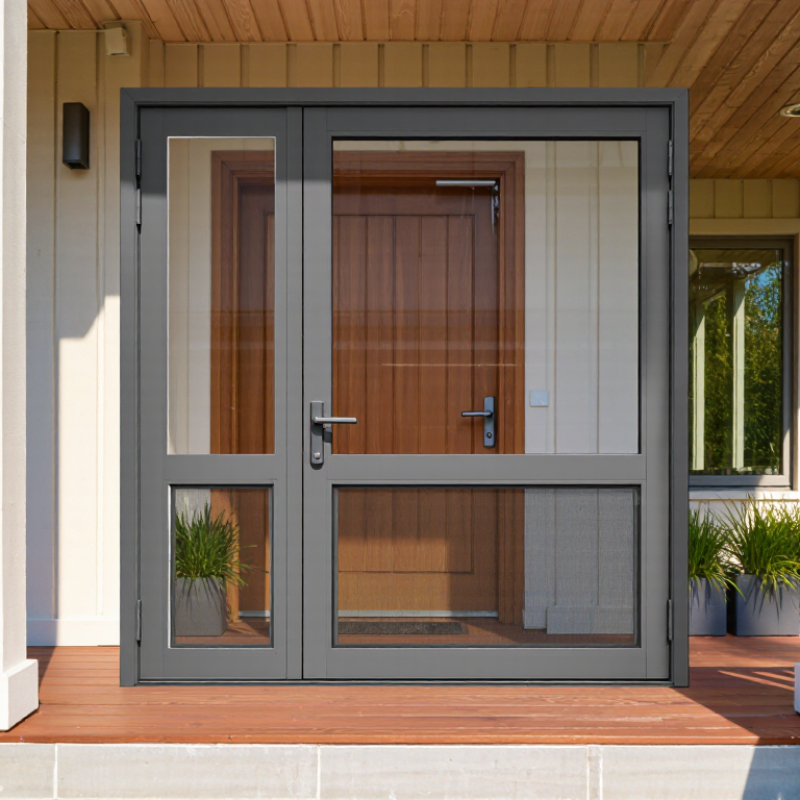
2 Choose a screen setup for how you ventilate Consider a retractable screen, a removable screen panel, or a ventilating design with movable glass panels. Check how easily screens can be removed for cleaning or repair. Retractable screens suit people who want the screen out of sight; removable or ventilating panels offer practical seasonal airflow.
3 Select the right glass configuration Full-view designs provide a larger glass area; partial-view designs use less glass and may include a solid lower panel. Some models offer low-emissivity glass to reduce heat transfer. Full view for daylight and an unobstructed view; partial view for households that prefer a more protected lower section.
4 Check the hinge side and handing Confirm whether the storm door can be configured to open from the left or right, and verify that the opening direction will not conflict with the entry door, steps, or nearby walls. Any entry where door swing, porch layout, or daily traffic affects access.
5 Measure the opening carefully Measure the width at the top, middle, and bottom and the height at both sides. Follow the installation guide to identify the required mounting surface and suitable size. All installations, especially older homes or openings that are not square.
6 Pick a closer that controls the door Look for an adjustable pneumatic or hydraulic closer and confirm that it is suitable for the door’s size and weight. Adjust closing speed so the door closes securely without slamming. Busy entrances, homes with children, and doors exposed to breezes.
7 Look for secure hold-open and release features Check how the closer holds the door open and how it releases. A simple, accessible hold-open feature is useful when carrying items, but the door should still close reliably afterward. Frequent trips in and out, deliveries, and everyday household use.
8 Compare frame materials and finishes Common choices include aluminum frames and steel components. Review the finish, corrosion protection, and care instructions; coastal or damp environments may require more corrosion-resistant hardware. Choose based on exposure, maintenance preferences, and the entry’s appearance.
9 Inspect seals, sweep, and fit Check that the door includes suitable perimeter weatherstripping and a bottom sweep that can be fitted to the threshold. A good fit helps limit drafts, dust, and insects. Homes where reducing drafts or keeping out insects is a priority.
10 Check handle clearance and maintenance access Make sure the storm-door handle will not hit the entry-door handle or interfere with the lock. Confirm that replacement screens, glass panels, closers, and other service parts are available. Any entrance with closely spaced doors or a preference for straightforward repairs.
Always verify the opening measurements, installation requirements, and local wind or building-code requirements before purchasing.