Global buyers are looking beyond attractive frames. They are comparing thermal performance, durability, certification, warranty support, and installation compatibility. Vinyl windows remain a major choice because their frames resist moisture, require limited maintenance, and support competitive energy performance.
Market evidence supports this interest. Grand View Research reports that the global windows and doors market continues expanding, driven by construction, renovation, and energy-efficiency upgrades. Fortune Business Insights also identifies replacement demand and sustainable building practices as important growth factors. However, market numbers vary between research firms. Definitions differ, and some reports combine windows with doors. That deserves caution.
The U.S. Department of Energy explains that window performance depends on the complete unit, including glazing, frame, installation, and climate. A lower U-factor can reduce heat transfer, while an appropriate Solar Heat Gain Coefficient may improve comfort. These details matter in a cold Scandinavian apartment, a humid coastal home, or a sun-exposed commercial project.
Building scientist Joseph Lstiburek offers a useful reminder: “Windows are holes in walls.” The phrase sounds simple. It exposes the real buying challenge. A reliable supplier must provide more than attractive samples. Buyers should examine NFRC or equivalent ratings, tested air leakage, water resistance, hardware quality, and after-sales documentation.
This guide evaluates top vinyl windows manufacturers for global buyers. It considers product engineering, production experience, export readiness, customization, certifications, and support. No manufacturer is perfect. Regional standards, installation skills, and logistics can change the final result. That is why informed comparison remains essential.
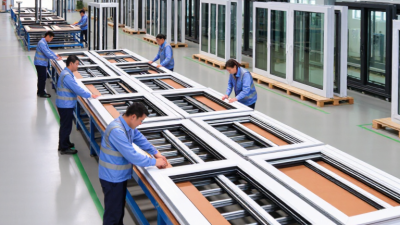
A leading vinyl window manufacturer is defined by repeatable performance, not a polished catalog. Its engineers understand extrusion, steel reinforcement, glazing, drainage, and installation tolerances. They test air leakage, water resistance, wind pressure, thermal transmission, and repeated operation. Testing should follow recognized regional standards and be documented. Clear reports matter to importers, architects, and building inspectors. Factory experience matters too. A useful question is simple: can the supplier explain why a corner weld failed?
Reliable production begins with controlled profiles and stable formulations. Incoming resin, colorant, steel, glass, seals, and hardware need inspection. Operators should check frame dimensions, sash alignment, drainage holes, and lock engagement. Digital traceability can connect a finished window to a batch and inspection record. It reduces guesswork when a shipment reaches a humid coast or a cold inland city. Packaging deserves attention. A scratched frame or broken spacer can erase the value of excellent engineering.
Strong manufacturers also adapt responsibly. They review local climate, code requirements, wall thickness, glazing preferences, and installer skill. They provide drawings, test data, maintenance guidance, and practical training. Warranty terms should state exclusions plainly, especially for glass, hardware, and incorrect installation. No factory gets every detail right. That is worth admitting. The better supplier tracks complaints, studies failures, and changes processes. I would still request independent test evidence, production samples, and references from comparable projects. A confident sales promise is not enough. Consistent evidence is.
For global buyers, vinyl window manufacturing should begin with verified standards, not attractive catalog images. The U.S. Department of Energy reports that windows can cause 25–30% of residential heating and cooling energy use. Therefore, manufacturers should publish tested U-factors, solar heat gain coefficients, air leakage, and visible transmittance values.
Testing should follow recognized procedures, including ISO 10077 for thermal performance and AAMA/WDMA/CSA 101/I.S.2/A440 for fenestration performance. Independent certification matters. The National Fenestration Rating Council explains that U-factor measures heat transfer, while lower values generally indicate better insulation. However, lower is not automatically better for every climate. A cold northern project may need different solar-gain performance than a tropical installation.
The International Energy Agency’s Buildings 2023 report states that buildings consumed about 30% of global final energy in 2022. This strengthens the case for multi-chamber profiles, low-conductivity spacers, and properly specified insulating glass. Low-emissivity coatings can reduce radiant heat transfer, while welded corners improve frame continuity and water resistance. For coastal markets, buyers should request corrosion testing and hardware-cycle evidence.
Real-world installation still decides much of the result. A highly rated window can underperform with poor flashing or uneven reveals. That is easy to overlook. I would also question unusually low U-factor claims without laboratory reports, product dimensions, and climate-specific ratings. Good manufacturers provide traceable test records, production tolerances, warranty terms, and replacement-part access for international projects.
A standards-focused comparison framework for evaluating vinyl window manufacturing capability, product performance, and export readiness without ranking individual companies or brands.
| Evaluation Dimension | Relevant Standard or Reference | Common Technical Benchmark | Why It Matters to Global Buyers | Recommended Verification Documents |
|---|---|---|---|---|
| uPVC Profile Material | EN 12608-1; ASTM D1784 | Impact-modified, weather-resistant unplasticized PVC profiles with documented formulation and dimensional stability. | Profile quality affects frame strength, weld performance, color retention, and service life. | Profile technical data sheet, material classification, formulation declaration, and batch traceability records. |
| Profile Wall Construction | Project specification and applicable regional profile requirements | Multi-chamber profiles with internal reinforcement provisions; chamber count alone should not be treated as a performance guarantee. | Chamber geometry influences thermal insulation, drainage, screw retention, and reinforcement integration. | Cross-section drawings, wall-thickness data, reinforcement details, and approved production samples. |
| Steel Reinforcement | Product engineering specification; local structural requirements | Galvanized steel or approved reinforcement designed for sash, frame, mullion, and hardware load paths. | Proper reinforcement helps control deflection, corner movement, hardware alignment, and wind-load performance. | Steel grade and coating information, reinforcement drawings, screw-fixing schedule, and structural calculations. |
| Air Leakage | ASTM E283; EN 1026 and EN 12207 | Lower air infiltration is preferable. ASTM E283 commonly reports leakage at a reference pressure difference of 75 Pa; EN 12207 classifies air permeability from Class 1 to Class 4. | Air leakage affects heating and cooling demand, indoor comfort, dust entry, and acoustic performance. | Independent air-infiltration test report identifying specimen size, pressure conditions, and leakage results. |
| Water Penetration Resistance | ASTM E331; EN 1027 and EN 12208 | Resistance is reported at a defined test pressure; higher pressure resistance generally indicates better exposure tolerance, subject to installation quality. | Water testing helps assess drainage paths, gasket compression, frame joints, and sash sealing. | Laboratory water-penetration report, drainage design, sill details, and installation instructions. |
| Wind Load and Structural Performance | ASTM E330/E330M; EN 12211 and EN 12210 | Test pressure and allowable deflection must be matched to building height, opening size, exposure category, and local code. | Structural performance is critical for large windows, coastal projects, high-rise buildings, and severe weather zones. | Structural test report, pressure sequence, deflection data, size limitations, and engineering calculations. |
| Thermal Transmittance | NFRC 100; ISO 10077-1; EN ISO 10077-2 | Whole-window U-factor depends on frame, glazing, spacer, dimensions, and edge conditions. Lower U-factor indicates lower heat transfer. | Whole-window thermal data is more useful than center-of-glass data for energy modeling and compliance. | NFRC or equivalent simulation report, declared dimensions, frame type, glazing build-up, and spacer specification. |
| Solar Heat Gain | NFRC 200; ISO 15099 | Solar Heat Gain Coefficient ranges from 0 to 1; lower values reduce solar heat gain, while higher values can benefit passive-solar designs. | SHGC selection should reflect climate, orientation, shading design, and cooling or heating priorities. | Certified fenestration rating, glazing make-up, coating location, and climate-specific energy calculations. |
| Visible Light Transmission | NFRC 200; ISO 9050 | Reported as a percentage or decimal fraction representing visible light passing through the complete glazing system. | It supports daylight planning and allows buyers to balance light transmission against solar control. | Glazing optical data, complete-window rating, glass thickness, and coating information. |
| Insulating Glass Units | ASTM E2190; EN 1279 series | Double or triple insulating glass with sealed cavities, compatible spacers, desiccant, and documented seal durability. | IGU edge-seal quality strongly affects condensation resistance, gas retention, and long-term thermal performance. | IGU certification or test report, sealant specification, spacer data, gas-fill process records, and visual inspection criteria. |
| Low-Emissivity Coatings | ISO 10292; NFRC 300; manufacturer glazing data | Low-e coatings are selected for solar control, winter heat retention, or a combination of both; coating position must be specified. | Correct coating selection improves energy performance without relying solely on thicker frames. | Glass make-up, emissivity data, coating position, solar-control data, and coating compatibility statement. |
| Gas Filling | IGU production specification; EN 1279 series | Argon is widely used in double and triple glazing; krypton may be specified for narrower cavities. Gas concentration should be verified by production controls or testing. | Gas filling can improve center-of-glazing thermal performance when combined with suitable cavity width and edge sealing. | Gas-fill process record, concentration test results, cavity-width specification, and seal-quality controls. |
| Condensation Resistance | NFRC 500; ISO 10077-2; project-specific condensation analysis | Condensation resistance depends on indoor humidity, outdoor temperature, frame geometry, spacer type, and thermal bridges. | It helps reduce mold risk, interior surface moisture, and customer complaints in cold or humid climates. | Condensation-resistance rating or simulation, spacer specification, thermal-bridge details, and installation guidance. |
| Hardware and Operating Cycles | EN 13115; EN 1191; applicable hardware specifications | Hardware should be corrosion-resistant and tested for repeated operation appropriate to the window type and project use. | Reliable hardware supports security, smooth operation, gasket compression, and long-term maintenance performance. | Hardware test report, corrosion classification, operating-cycle results, load limits, and replacement-part policy. |
| Security and Locking | EN 1627–EN 1630; local security requirements | Resistance class is project-specific and depends on the complete assembly, including frame, sash, glass, locks, and installation. | Security performance cannot be confirmed from the lock type alone; the complete tested configuration is required. | Complete-window security test report, locking-point layout, laminated-glass specification, and installation requirements. |
| Acoustic Performance | ISO 10140; ISO 717-1; ASTM E90 | Sound reduction is expressed using weighted ratings such as Rw or STC, depending on the market and test method. | Glass thickness, asymmetry, laminated interlayers, frame seals, and installation joints all influence sound insulation. | Complete-window acoustic test report, glazing configuration, test size, and perimeter-seal requirements. |
| Color and Weathering | EN 12608-1; ISO 4892 series; regional accelerated-weathering requirements | White, colored, co-extruded, and laminated finishes require different weathering controls and acceptance criteria. | Color stability and surface durability are important for long-term appearance, particularly in high-UV or coastal regions. | Weathering test results, color tolerance values, surface-finish specification, and maintenance instructions. |
| Welded Corner Quality | EN 514; internal process-control specification | Welded corners should be free from visible cracks, incomplete fusion, excessive flash, and distortion beyond approved tolerances. | Corner quality affects air and water tightness, sash alignment, appearance, and resistance to movement. | Welding-machine settings, corner-strength test records, inspection checklist, and dimensional-control reports. |
| Drainage and Pressure Equalization | System design specification; EN 12207 and EN 12208 test requirements | Drainage channels, weep holes, baffles, and sill slopes should be designed to discharge water without compromising air seals. | Effective drainage reduces leakage risk and supports performance in wind-driven rain conditions. | Section drawings, drainage-path diagrams, weep-hole dimensions, and water-test documentation. |
| Factory Quality Management | ISO 9001; documented inspection and corrective-action procedures | Controlled incoming materials, in-process checks, final inspection, nonconformance handling, and lot traceability. | A documented quality system improves consistency across production batches and export orders. | Quality certificate, inspection plan, calibration records, nonconformance logs, and traceability samples. |
| Sustainability and Recyclability | ISO 14001; EN 17410; regional recycled-content or environmental requirements | Recyclable PVC, controlled production waste, documented recycled content where applicable, and responsible packaging practices. | Environmental documentation may be required for green-building projects, public procurement, and regulated markets. | Environmental-management certificate, recycled-content declaration, waste-reduction records, and environmental product documentation. |
| Export Packaging and Logistics | ISPM 15 for regulated solid-wood packaging; project shipping specification | Protective corner guards, moisture-resistant wrapping, separation between units, labeling, and container-load planning. | Proper packaging reduces glass breakage, frame distortion, surface damage, and installation-site delays. | Packing specification, loading photographs, containerization plan, carton labels, and pre-shipment inspection report. |
| Installation Compatibility | ASTM E2112; EN монтаж and national installation guidance | Installation details should define rough-opening tolerance, sill support, fastener spacing, air-seal continuity, and perimeter flashing. | Window ratings apply to the tested product; poor installation can significantly reduce real-world performance. | Installation manual, approved details, fastening schedule, sealant compatibility data, and installer training records. |
Buyer note: Performance values are not directly comparable unless the tested window size, configuration, glazing, spacer, hardware, test method, and installation conditions are equivalent. Always request complete-window test reports rather than relying only on profile or glass-center specifications.
Regional strengths shape how leading vinyl window suppliers serve global buyers. North American manufacturers often excel in large-frame designs, replacement projects, and energy ratings suited to cold winters. Their product catalogs commonly include double-hung windows, reinforced frames, and broad customization options. In supplier audits, I check corner welding, drainage paths, and hardware consistency rather than relying on brochures alone.
European producers are strong in compact profiles, airtight construction, and strict thermal performance. Their tilt-and-turn systems suit urban apartments and renovation projects with limited wall space. Many facilities emphasize recyclable materials and precise factory controls. However, buyers should confirm whether a European design matches local installation practices. A high-performing frame can fail when installers overlook flashing details.
East Asian suppliers often provide flexible production, competitive tooling, and efficient export packaging. They may adapt colors, glass combinations, and dimensions for different markets. Southeast Asian manufacturers can offer useful advantages for humid climates, especially when frames include effective drainage and corrosion-resistant hardware.
Test samples matter. I once saw a polished sample perform poorly after repeated opening cycles. That experience changed my evaluation process.
I now request air, water, wind, and operating tests before approving volume orders. Regional expertise helps, but documentation, factory visits, and independent inspection remain essential for dependable purchasing.
How to Compare Quality, Pricing, and Customization Options
Choosing vinyl windows for international projects requires more than comparing catalog prices. In sourcing work, I examine frame welds, drainage paths, glazing seals, and hardware alignment. These details often reveal quality before installation. The U.S. Department of Energy reports that windows can represent 25% to 30% of residential heating and cooling energy use. Therefore, compare U-factor, solar heat gain coefficient, and air leakage ratings, not only frame color.
The National Fenestration Rating Council provides standardized performance labels for these measurements. A lower U-factor generally improves insulation, while the best solar heat gain coefficient depends on climate and building orientation.
Pricing should include packaging, testing, shipping, replacement parts, and installation tolerances. A cheap quotation may become expensive when custom dimensions require new tooling.
Customization can cover sash sizes, glass thickness, insect screens, laminated glass, finishes, and hardware. Still, more options can increase lead times and quality risks. That trade-off deserves honest review.
Tips:
Request a sample corner and a complete test report. Compare identical specifications across three quotations. Ask for thermal and acoustic data. Check whether colors remain stable after ultraviolet exposure. Review warranty exclusions carefully. A factory may promise everything. Written evidence matters more. I would also test one pilot shipment before placing a large order. This step costs time, but it can expose packaging damage, inconsistent dimensions, or confusing installation instructions. Industry reports are useful, yet field inspection remains imperfect and necessary.
Top Vinyl Windows Manufacturers for Global Buyers
International buyers should assess vinyl windows beyond price and profile shape. The U.S. Department of Energy reports that windows can cause 25–30% of residential heating and cooling energy use. That figure makes glass selection, frame design, and installation tolerances commercial decisions, not decorative details. Ask for documented U-values, solar heat gain coefficients, air-leakage results, and test methods. Certificates should match the destination market’s requirements. A familiar laboratory report may not satisfy local authorities.
Delivery planning deserves equal attention. UNCTAD’s Review of Maritime Transport 2024 states that more than 80% of global merchandise trade by volume moves by sea. A window shipment may therefore face port congestion, moisture exposure, transshipment, or customs delays. Use reinforced corner protection, dry containers where practical, and moisture indicators inside packaging. Confirm pallet dimensions before booking freight. A few extra centimeters can change the freight class.
Do not trust the promised lead time alone. The World Bank’s Logistics Performance Index 2023 evaluates customs, infrastructure, shipment organization, logistics competence, tracking, and timeliness across 139 economies. These factors can affect the final delivery more than factory speed. Request production photos, carton-level labels, loading records, and a pre-shipment inspection. Small gaps remain. Packaging standards are sometimes treated as an afterthought, and that assumption often fails. Build buffer days into installation schedules, especially during seasonal demand or regional holidays.